
 Image 1 of 1
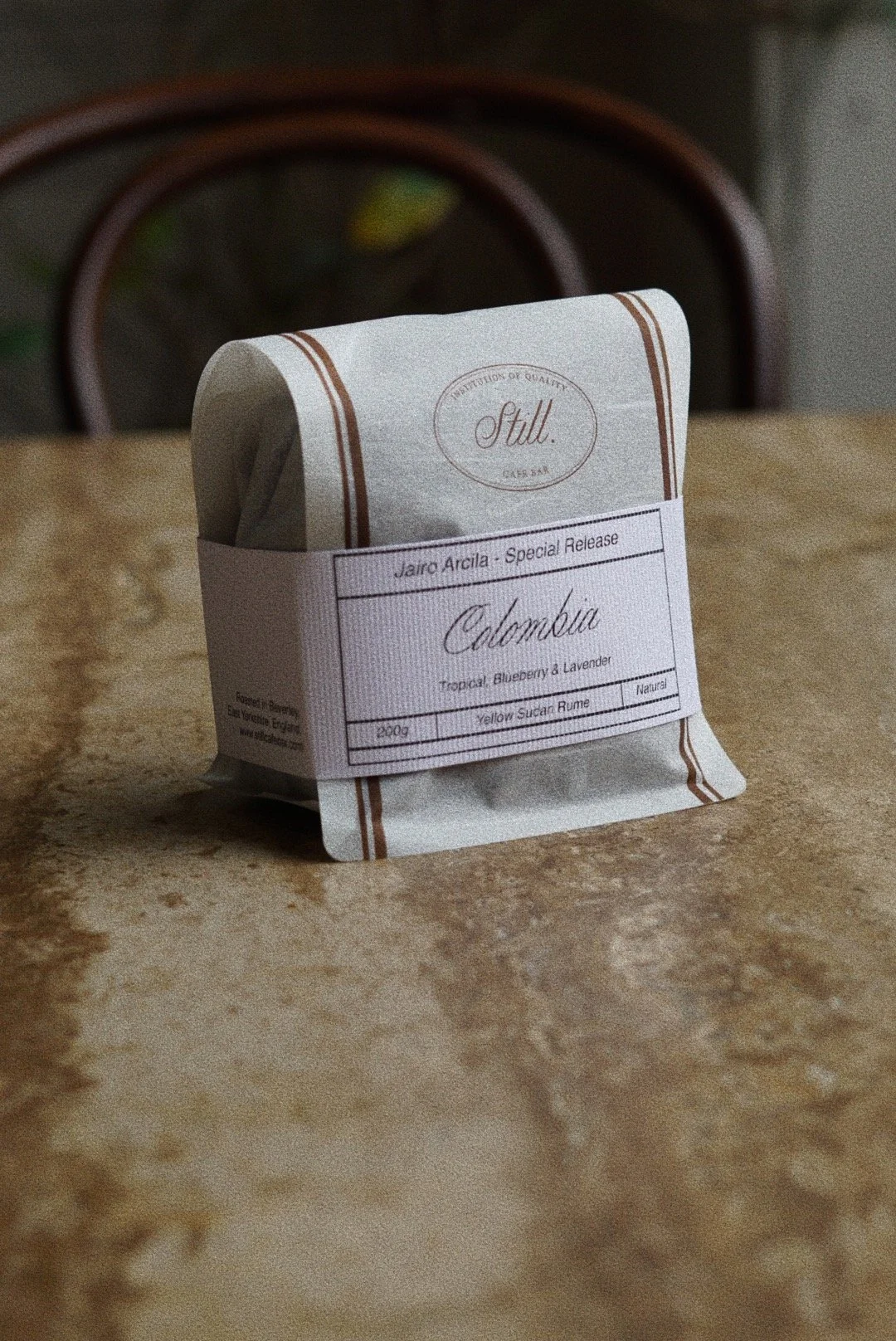
Colombia, Jairo Arcila (Sudan Rume)
Blueberry, lavender & pineapple
This is an exotic microlot produced by one of the best producers. Our first Sudan Rume. This typical lot is a Yellow Sudan Rume. This is where the cherry is yellow. Over the years we have ran specials but Sudan Rume always stands out amongst everything. Its expressive character shines on the cupping table. This lot is further enhanced by a short period of aerobic fermentation before being dried naturally over 10 days.
200g
Producer: Jairo Arcila
Altitude: 1400-1450masl
Varietal: Yellow Sudan Rume
Process: Natural
Region: Armenia, Quindio
SCA: 90
Yellow Sudan Rume
Sudan Rume originates from the Boma Plateau in South Sudan, near the Ethiopian border, an area considered part of the genetic birthplace of Coffea arabica. This variety is named after the Rume region, where it was first discovered, and it is highly prized for its exceptional cup quality and genetic importance. Sudan Rume is a landrace variety, meaning it has evolved naturally over time without human intervention, adapting to its specific environment. It is closely related to the wild coffee varieties found in the forests of Ethiopia, which are the ancestors of most cultivated Arabica coffee today. Its genetic diversity makes it a valuable resource for coffee breeding programs, particularly for developing disease-resistant and climate-resilient varieties.
The Sudan Rume variety is known for its low yield and delicate nature, making it challenging to cultivate on a large scale. However, its cup profile is extraordinary, often described as exceptionally clean and complex, with vibrant floral notes, intense sweetness, and pronounced fruity flavours such as bergamot, peach, and tropical fruits. Its bright acidity and tea-like body make it a favourite among specialty coffee enthusiasts and a frequent contender in coffee competitions.
Due to its rarity and exceptional quality, Sudan Rume is often produced in limited quantities and commands premium prices in the specialty coffee market. It has gained particular attention in recent years as farmers and researchers recognize its potential to contribute to the genetic diversity of coffee, which is crucial for the industry’s future in the face of climate change and disease pressures.
In Colombia, Sudan Rume has been cultivated experimentally by forward-thinking producers, At Cofinet, we explore its potential in different terroirs. These efforts have yielded impressive results, showcasing the variety’s ability to adapt to new environments while maintaining its distinctive flavour profile.
We are proud to cultivate theSudan Rumevariety atJardines del Edén, one of our flagship farms. This rare and exceptional variety has thrived in our unique terroir, showcasing its potential to produce outstanding coffee.
Interestingly, during our cultivation, we discovered that some of the Sudan Rume trees yieldyellow cherries, a rare mutation that adds even more uniqueness to this already extraordinary variety. This discovery led to the creation of our Yellow Sudan Rume offering, which highlights the diversity and complexity of this remarkable coffee.
Process
Jairo Arcila and his team of pickers selectively harvest only the ripest cherries. The cherries are then transported to Villarazo's sorting area, where the team meticulously hand-sorts and float them to eliminate any low-density, underripe, or defective beans. Then, the cherries are transported to our processing center, La Pradera, in Grainpro bags or suitable containers to preserve their freshness.
Upon arrival, we continue with our rigorous quality protocols. The cherries are placed in water tanks to float them, removing any low-density beans and external material. The water used in this stage is recycled for more baches that require floating. Once this water is no longer suitable to be used for floating, it is filtered through a series of specialized tanks before being irrigated into vetiver grass beds and is released as oxygen. This natural filtration process purifies the water, ensuring no contaminated water is discharged from our processing center and maintaining an environmentally sustainable operation.
After floating, the cherries undergo a meticulous hand-sorting stage. Here, we eliminate any unripe, overripe, or faulty cherries to ensure only the best cherries move forward in the process.
For this lot, cherries are exposed to 45-hour aerobic fermentation. This method highlights the intrinsic flavors of the coffee, resulting in a cup that is rich, complex, and deeply connected to its origin. Afterwards, cherries are spread out on raised beds. Here, they are spread evenly in thin layers to allow for consistent airflow and exposure to sunlight. The cherries are carefully monitored and turned regularly to ensure uniform drying and to prevent over-fermentation or mold.
The drying process can take between 8 to 12 days, during which the sugars and flavors from the fruit slowly permeate the beans. This creates a unique profile characterized by intense fruitiness, sweetness, and a full-bodied.
We aim for a moisture content of 9.5%-11%, which is the perfect point for us. Our greenhouse maintains a temperature range of 20 to 38°C, helping us achieve a consistent drying time for our coffees.
Blueberry, lavender & pineapple
This is an exotic microlot produced by one of the best producers. Our first Sudan Rume. This typical lot is a Yellow Sudan Rume. This is where the cherry is yellow. Over the years we have ran specials but Sudan Rume always stands out amongst everything. Its expressive character shines on the cupping table. This lot is further enhanced by a short period of aerobic fermentation before being dried naturally over 10 days.
200g
Producer: Jairo Arcila
Altitude: 1400-1450masl
Varietal: Yellow Sudan Rume
Process: Natural
Region: Armenia, Quindio
SCA: 90
Yellow Sudan Rume
Sudan Rume originates from the Boma Plateau in South Sudan, near the Ethiopian border, an area considered part of the genetic birthplace of Coffea arabica. This variety is named after the Rume region, where it was first discovered, and it is highly prized for its exceptional cup quality and genetic importance. Sudan Rume is a landrace variety, meaning it has evolved naturally over time without human intervention, adapting to its specific environment. It is closely related to the wild coffee varieties found in the forests of Ethiopia, which are the ancestors of most cultivated Arabica coffee today. Its genetic diversity makes it a valuable resource for coffee breeding programs, particularly for developing disease-resistant and climate-resilient varieties.
The Sudan Rume variety is known for its low yield and delicate nature, making it challenging to cultivate on a large scale. However, its cup profile is extraordinary, often described as exceptionally clean and complex, with vibrant floral notes, intense sweetness, and pronounced fruity flavours such as bergamot, peach, and tropical fruits. Its bright acidity and tea-like body make it a favourite among specialty coffee enthusiasts and a frequent contender in coffee competitions.
Due to its rarity and exceptional quality, Sudan Rume is often produced in limited quantities and commands premium prices in the specialty coffee market. It has gained particular attention in recent years as farmers and researchers recognize its potential to contribute to the genetic diversity of coffee, which is crucial for the industry’s future in the face of climate change and disease pressures.
In Colombia, Sudan Rume has been cultivated experimentally by forward-thinking producers, At Cofinet, we explore its potential in different terroirs. These efforts have yielded impressive results, showcasing the variety’s ability to adapt to new environments while maintaining its distinctive flavour profile.
We are proud to cultivate theSudan Rumevariety atJardines del Edén, one of our flagship farms. This rare and exceptional variety has thrived in our unique terroir, showcasing its potential to produce outstanding coffee.
Interestingly, during our cultivation, we discovered that some of the Sudan Rume trees yieldyellow cherries, a rare mutation that adds even more uniqueness to this already extraordinary variety. This discovery led to the creation of our Yellow Sudan Rume offering, which highlights the diversity and complexity of this remarkable coffee.
Process
Jairo Arcila and his team of pickers selectively harvest only the ripest cherries. The cherries are then transported to Villarazo's sorting area, where the team meticulously hand-sorts and float them to eliminate any low-density, underripe, or defective beans. Then, the cherries are transported to our processing center, La Pradera, in Grainpro bags or suitable containers to preserve their freshness.
Upon arrival, we continue with our rigorous quality protocols. The cherries are placed in water tanks to float them, removing any low-density beans and external material. The water used in this stage is recycled for more baches that require floating. Once this water is no longer suitable to be used for floating, it is filtered through a series of specialized tanks before being irrigated into vetiver grass beds and is released as oxygen. This natural filtration process purifies the water, ensuring no contaminated water is discharged from our processing center and maintaining an environmentally sustainable operation.
After floating, the cherries undergo a meticulous hand-sorting stage. Here, we eliminate any unripe, overripe, or faulty cherries to ensure only the best cherries move forward in the process.
For this lot, cherries are exposed to 45-hour aerobic fermentation. This method highlights the intrinsic flavors of the coffee, resulting in a cup that is rich, complex, and deeply connected to its origin. Afterwards, cherries are spread out on raised beds. Here, they are spread evenly in thin layers to allow for consistent airflow and exposure to sunlight. The cherries are carefully monitored and turned regularly to ensure uniform drying and to prevent over-fermentation or mold.
The drying process can take between 8 to 12 days, during which the sugars and flavors from the fruit slowly permeate the beans. This creates a unique profile characterized by intense fruitiness, sweetness, and a full-bodied.
We aim for a moisture content of 9.5%-11%, which is the perfect point for us. Our greenhouse maintains a temperature range of 20 to 38°C, helping us achieve a consistent drying time for our coffees.