
 Image 1 of 1
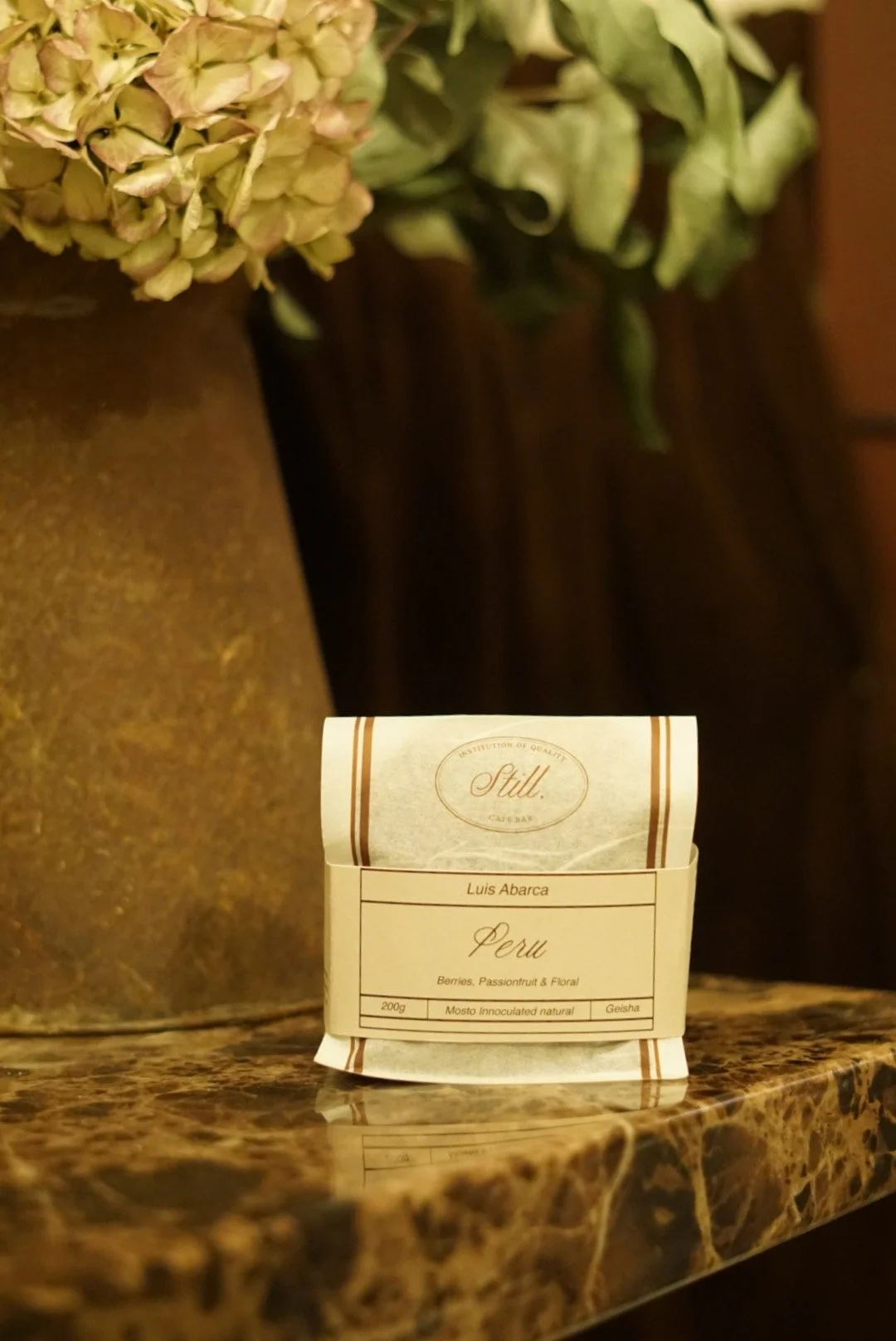
Berries, Passionfruit and floral —
This is our second release from Chacra coffee in Peru. Owned by an old school friend Simon and his wife Merlith. We have bought 4 coffees from them.
This is the natural version of the earlier release. We showcase more sweetness in this lot due to its process. Again this coffee is fermented in Mosto (juice made from coffee cherry) in a bioreactor. Then dried naturally. All these elements lead to a more tropical and sweeter expression.
Farm Name : El Romerillo
Location : Agua Colorada, Huabal, Cajamarca
Altitude : 1850-1950 masl
Variety : Geisha
SCA score : 89
Farming Practises : Organic and chemical fertiliser use, manual weeding
Drying : Parabolic dryer
Processing Style: Natural
Fermentation Time : 42 hours
Fermentation Type : in Bioreactor with mosto
Farmer Story:
Luis Abarca is a young, second generation coffee farmer, who started planting coffee in 2017 when he inherited land from his father. He started planting caturra and bourbon, as, at that time they were considered the two best varieties in the area. After success in local and national coffee quality competitions. Luis invested in processing courses and planted his first plot of geisha in 2020.
Processing:
Over the last few years Luis has been perfecting the processing of his different varieties, experimenting with controlled fermentations for both washed and natural processing styles. Luis makes mosto, cultures he makes from small batches of both pulped and natural coffee, which he then uses to inoculate batches of coffee. In this case the coffee cherries are pulped are placed in bioreactors which Luis himself adapts from food grade plastic tanks, along with mosto and they're fermented for a period of approximately 72 hours, with regular measurements of pH and brix to see how the fermentation is progressing. All of this is done under natural pressure created by gases released from fermentation.
Drying:
After fermentation the coffee is pre died in the sun for a couple of hours to remove excess moisture before being placed on raised beds in a rabolic dryer where it dries for 15 days.
Berries, Passionfruit and floral —
This is our second release from Chacra coffee in Peru. Owned by an old school friend Simon and his wife Merlith. We have bought 4 coffees from them.
This is the natural version of the earlier release. We showcase more sweetness in this lot due to its process. Again this coffee is fermented in Mosto (juice made from coffee cherry) in a bioreactor. Then dried naturally. All these elements lead to a more tropical and sweeter expression.
Farm Name : El Romerillo
Location : Agua Colorada, Huabal, Cajamarca
Altitude : 1850-1950 masl
Variety : Geisha
SCA score : 89
Farming Practises : Organic and chemical fertiliser use, manual weeding
Drying : Parabolic dryer
Processing Style: Natural
Fermentation Time : 42 hours
Fermentation Type : in Bioreactor with mosto
Farmer Story:
Luis Abarca is a young, second generation coffee farmer, who started planting coffee in 2017 when he inherited land from his father. He started planting caturra and bourbon, as, at that time they were considered the two best varieties in the area. After success in local and national coffee quality competitions. Luis invested in processing courses and planted his first plot of geisha in 2020.
Processing:
Over the last few years Luis has been perfecting the processing of his different varieties, experimenting with controlled fermentations for both washed and natural processing styles. Luis makes mosto, cultures he makes from small batches of both pulped and natural coffee, which he then uses to inoculate batches of coffee. In this case the coffee cherries are pulped are placed in bioreactors which Luis himself adapts from food grade plastic tanks, along with mosto and they're fermented for a period of approximately 72 hours, with regular measurements of pH and brix to see how the fermentation is progressing. All of this is done under natural pressure created by gases released from fermentation.
Drying:
After fermentation the coffee is pre died in the sun for a couple of hours to remove excess moisture before being placed on raised beds in a rabolic dryer where it dries for 15 days.